

Everything You Need to Know About Grain Drying
Before storing your product, it is important to take certain precautions; the first of these is grain drying.
In this process, the grain is conditioned by removing moisture until it reaches equilibrium with the ambient air, thereby preserving its appearance, food characteristics, nutritional quality, and seed viability.
Drying Methods
Artificial drying
This is an artificial process used to remove a certain amount of water from the grain—moisture that would otherwise be detrimental to storage.
Natural drying
This method relies on wind to move the drying air, while the energy required to evaporate moisture comes from the air’s drying capacity and solar energy.
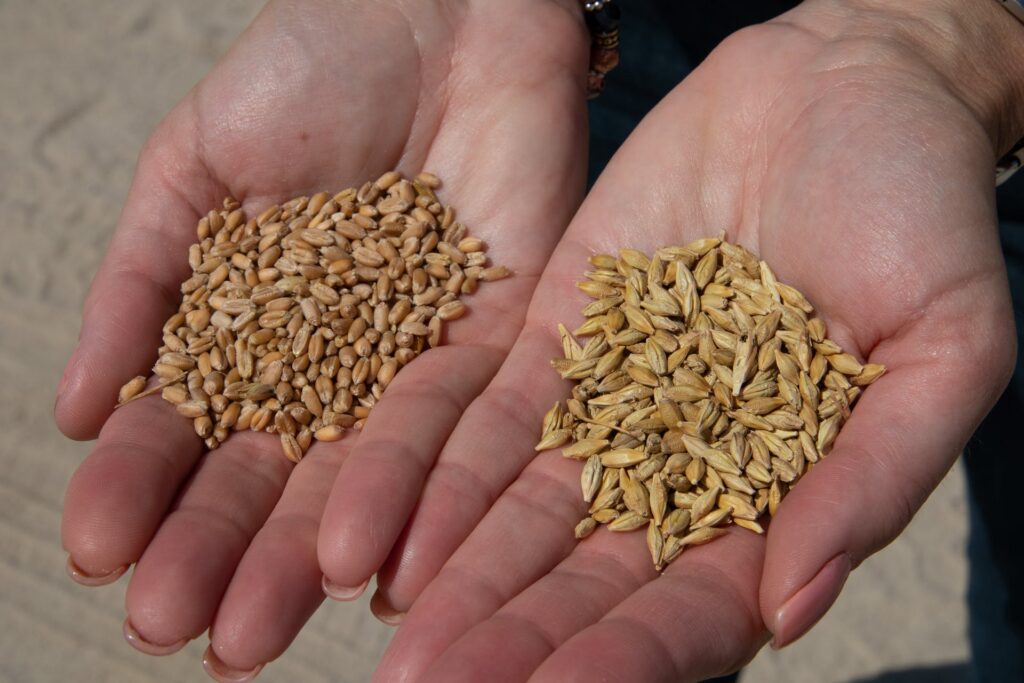
Grain Drying Process for Storage
Harvesting:
After harvesting, grains generally contain high moisture levels, making them susceptible to spoilage and the growth of fungi and bacteria.
Preliminary Steps:
Before drying, impurities and debris—such as leaves and stalks—are removed from the grain to facilitate the process and ensure quality.
Drying:
The primary objective is to reduce grain moisture to a safe level for storage, typically around 12–14%. This is done to prevent the growth of microorganisms and the development of mold.
Drying Methods:
Air Drying:
Grains are spread in thin layers on the ground or on raised platforms, allowing wind and sunlight to aid the water evaporation process.
It is a simple and cost-effective method, though its effectiveness depends on weather conditions and it can take longer.
Hot Air Drying:
Forced hot air is passed through the grains to accelerate the evaporation process.
This can be carried out using portable dryers or larger facilities equipped with temperature control systems.
Bulk Drying:
The grain is placed in large silos or bulk dryers, where hot air is applied to reduce moisture content.
This method is efficient for large quantities of grain and allows for precise control over temperature and drying time.
Thin-Layer Drying:
The grain is spread in thin layers on trays or conveyor belts, and hot air is passed through these layers.
This method is efficient and is often used for high-value grains.
Grain drying is essential for ensuring quality and food safety. The choice of drying method depends on factors such as the scale of the operation, the type of grain, and local climatic conditions. Proper drying ensures that the grain can be stored safely and is ready for subsequent use.
Lo más popular

Natural Solvents in urban pesticides
Urban pesticides are formulated with adjuvants that determine the type of...
Why is it important that natural products and repellents controlling pests are registered in COFEPRIS?
Why is it important that natural products and repellents controlling...
Respiratory Safety During Phosphine Fumigation
Phosphine fumigation is used for pest control in stored...

0 Comments