

Natural Solvents in urban pesticides
Urban pesticides are formulated with adjuvants that determine the type of formulation. Examples include suspension concentrates (SC), emulsifiable concentrates (EC), emulsifiable suspension (ES), soluble liquids (SL), etc.
Solvents in pesticides
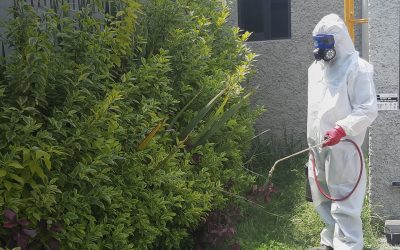
Some of these formulas formulation, such as Emulsifiable Concentrates (EC), contain high levels of solvents, primarily to dilute active ingredients with low water solubility; the solvent helps increase contact coverage and evaporates after application, leaving behind the active ingredient and a certain amount of residue.
These solvents are typically harmful volatile organic compounds (VOCs), specifically aromatic hydrocarbons, such as benzene, xylenes, toluene, and naphthalene, all of which have adverse health effects. The following table shows the effects of two components widely used in pesticide formulations for urban, livestock, and agricultural settings:
| Xilene | Skin, eyes, nose and throat irritation; beathing difficulties, impaired lung function, delayed reaction to visual stimuli, memory impairment, stomach upset, and possibly, liver and kidney damage. |
| Naphthalene | Naphthalene Irritation and burns to the skin and eyes, throat, and nose irritation, headache, dizziness, nausea, and vomiting. |
Xylene or Xylol, is produced from petroleum. The most common way to be exposed to this type of compound is by inhaling its vapors or ingesting contaminated food; it can also be absorbed through direct skin contact.
Similarly, naphtha is obtained from petroleum during the refining process. It is commonly used in paints for coating various surfaces and in certain pesticides. It appears on the list of hazardous substances issued by OSHA (the US Occupational Safety and Health Administration), is highly flammable, and has adverse effects on human reproductive health.
Reducing solvents in pesticides
Looking for a substantial reduction in risk and environmental impact, Grupo Preserve® develops pesticide solvents derived from renewable sources, such as methyl soyate and methyl oleate. These solvents are found in the following products: Crucial® Plus, Crucial® 20, DDvert® 20, DDvert® 50, Ecofly®, and Beebiol®. Methyl soyate is a methyl ester derived from soybean oil; it is, therefore, considered environmentally friendly and safe for human health.
Methyl oleate is a fatty ester derived from the condensation of the carboxylic group of oleic acid with methanol; it is biodegradable and has no effect on mammalian reproduction. The following table shows the effects of the two components used to formulate some of these urban pesticides:
| Methyl oleate | Methyl oleate Mild irritation in eyes, skin and airways. |
| Methyl soyate | Methyl oleate Mild irritation in eyes, skin and airways. |
Consequently, pesticides of urban line from Grupo Preserve®, have a minimal impact on the environment, they are biodegradable and have no affectations on the appliers or people health in contact with them or the treated zones compared with the traditionally used.
Most popular

Safeguarding seeds for posterity
The sun is unforgiving outdoors; temperatures do not drop below 33ºC....

Grains as an aid to our Survival
Shelling out a large sum of money at a very expensive restaurant might...
Why eliminate dichlorvos in urban applications?
What is dichlorvos The dichlorvos (DDVP - Dimethyl Dichlorovinyl...

0 Comments