

IPM for the Food and Beverage Industry
Stored-product pests
The origin of stored-product pests dates to the dawn of human civilization, specifically to the advent of agriculture and the practice of stockpiling food to reduce reliance on nature’s production cycles.
Controlling stored-product pests has always been challenging, and it remains so today due to storage dynamics and significant changes in ecology, climate, and human behavior that foster pest proliferation.
Integrated Pest Management
Integrated Pest Management—better known as IPM—is a strategy that combines available pest control techniques, practices, and methods into a program designed to prevent all types of pests during production processes and avoid significant economic loss.
IPM is a system that integrates with other management systems and serves as a fundamental prerequisite for implementing the Hazard Analysis and Critical Control Point (HACCP) system.
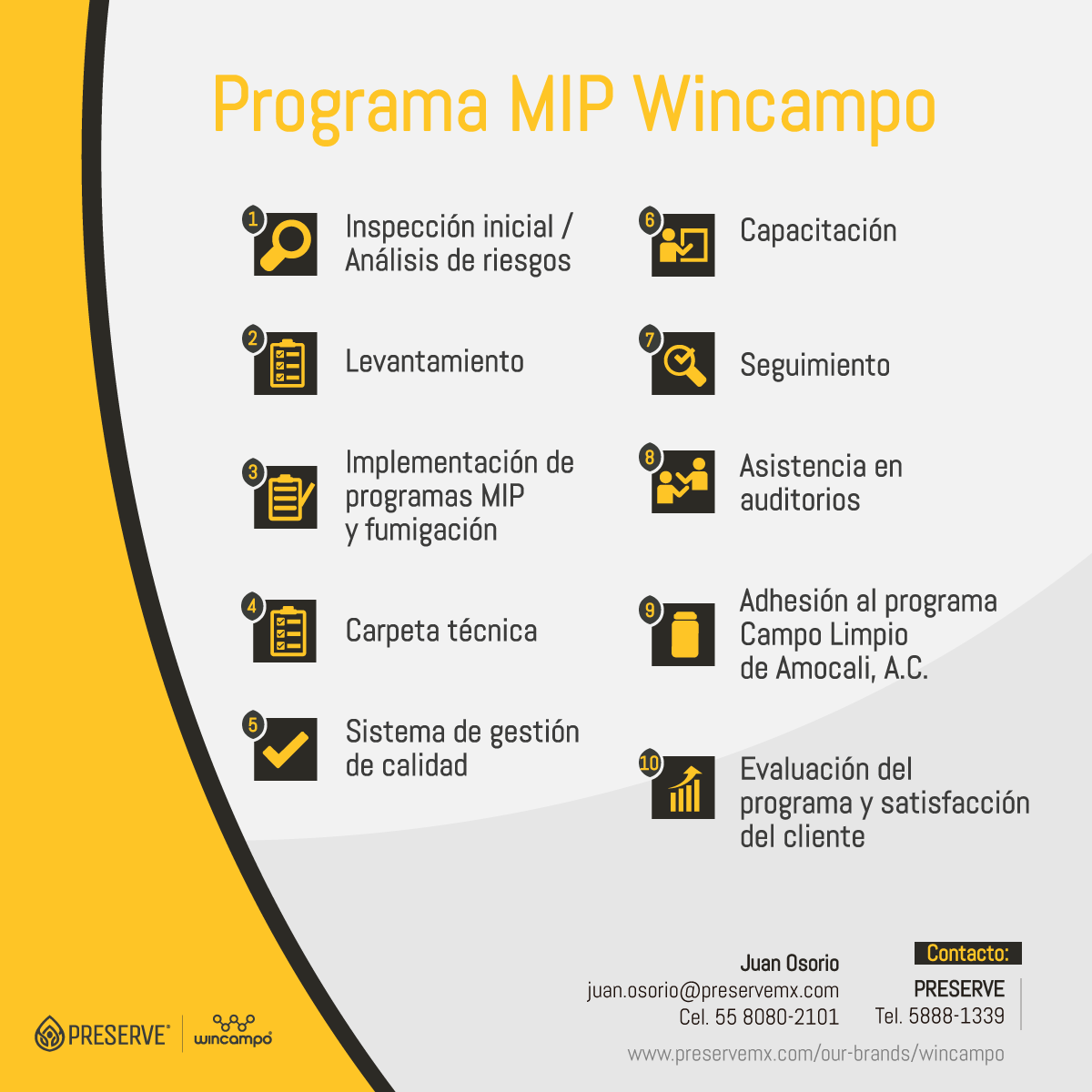
Wincampo®’s IPM program for the food industry complies with NOM standards and international quality norms, covering the following aspects:
Initial inspection
Wincampo®’s team of specialists conducts an initial inspection to identify key areas where risks could lead to pest infestations or re-infestations within your facilities.
The information gathered is used to produce a report containing an environmental analysis (including images). This data helps our clients install physical barriers, creating safer environments for their products and/or services.
Site assessment
Based on the risk analysis, Wincampo®’s team of specialists determines the number of monitoring devices and the quantity of supplies required for the IPM program. This information enables us to design the ideal program for your plant and calculate the cost of the operation to be carried out at your facilities.
Implementation of IPM and Fumigation Programs
Our programs can be scheduled on a weekly, bi-weekly, or monthly basis, or even include on-site (in-plant) technical personnel. Each program utilizes a record-keeping system with full traceability, enabling processes with very high levels of reliability.
The pesticides used in our IPM and fumigation programs—including brands such as Degesch®, Beevert®, and other recognized names—are all authorized by COFEPRIS for the specific activities performed at each client’s facility.
Technical Dossier
Our clients have access to this dossier to support them during audits or inspections by any health authority.
The dossier comprises twenty-two sections, including: a cover page, table of contents, introductory letter, sanitary license, liability insurance, service contract, technical proposal, activity schedule, map showing monitoring equipment locations, technical data sheets, Safety Data Sheets (SDS), and COFEPRIS registrations, among other documents essential for meeting internal and external audit requirements.
Quality Management System
Our system adheres to the most rigorous food safety protocols, benefiting our clients by creating pest-free work environments. We maintain control and traceability over our processes, ensuring quality in every service we provide.
Training
We offer a catalog of high-quality courses that complement our pest control programs. Backed by the Preserve® Training Center—which is accredited by STPS and CONOCER—we enable our clients to receive training and certification through quality processes that can be implemented directly in their facilities or operations.
Follow-up
Our documentation system and Integrated Pest Management (IPM) program allow us to track areas for improvement or structural deficiencies until they are resolved in collaboration with the client. This helps reduce waste and financial losses caused by pests. We also utilize an internal audit system to drive continuous improvement plans that benefit our clients.
Audit Support
Our team of specialists provides the necessary support during IPM-related audits. We have extensive experience with Food Quality Management Systems, including HACCP, SQF, FSSC 22000, and BRC, among others.
Participation in Amocali, A.C.’s “Campo Limpio” (Clean Field) Program
We adhere to the “Triple Rinse” methodology for empty containers and ensure their proper disposal at Temporary Collection Centers as part of Amocali, A.C.’s “Campo Limpio” program.
Program Evaluation and Customer Satisfaction
We evaluate the results of the programs we implement, ensuring complete customer satisfaction through continuous improvement initiatives.
Accredited Personnel
Our staff holds the necessary accreditations to perform their duties—such as DC3 certification for working at heights and in confined spaces, as well as the proper handling and use of phosphides—enabling them to carry out their work professionally and in strict adherence to safety standards.
Most popular
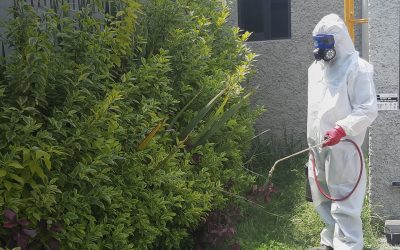
Why is it important that natural products and repellents controlling pests are registered in COFEPRIS?
Why is it important that natural products and repellents controlling...

Respiratory Safety During Phosphine Fumigation
Phosphine fumigation is used for pest control in stored...
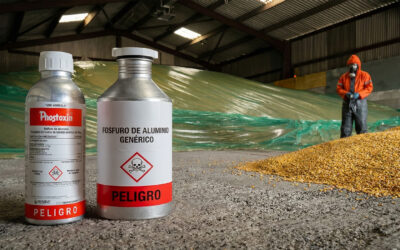
Why has Phostoxin always been different?
A premium, authentic product—starting with the...

0 Comments