

Safeguarding seeds for posterity
The sun is unforgiving outdoors; temperatures do not drop below 33ºC. Indoors, it is a different story: the -18ºC feels with every step and every breath. Just 20 minutes from the city of Cali, Colombia, a seed vault awaits eternity.
Not a single inch of this vast room goes to waste. From floor to ceiling, shelves are packed with small aluminum packets and white plastic bottles containing seeds, each systematically labeled with a long number and a barcode. Like bank vaults, riches are stored here.
The Germplasm Bank of the Genetic Resources Program at the International Center for Tropical Agriculture (CIAT) houses the largest and most diverse bean collection on the planet.
It holds 37,987 varieties of *Phaseolus vulgaris*—known in various Latin American countries by names such as “porotos”, “judías”, “alubias”, or “habichuelas”—originating from 110 countries and spanning a vast array of colors, sizes, and shapes. Added to this are 23,140 varieties of forage or livestock feed.
A Biological Vault
A staple in the diets of hundreds of millions of people worldwide, beans are among the oldest foods known to humanity. Archaeological evidence indicates they were cultivated in Mexico and Guatemala as early as 7000 BC. The Aztecs knew this incredible source of protein as “etl”, the Incas called them “purutu”, and the Mayans “búul”.
“However, since those times, cultivated land has shrunk drastically due to the destruction of natural habitats, and agricultural biodiversity has also declined,” notes Belgian botanist Daniel Debouck, head of the Genetic Resources Program at CIAT.
“In an effort to curb genetic erosion in plants—says the researcher, who once narrowly escaped falling into the hands of guerrillas during a mission to Peru in the 1980s, germplasm banks were established in recent decades to conserve key resources and make them available for crop improvement.”
Nikolai Vavilov and the Seeds
Nikolai Vavilov was one of the first ones to recognize the need for such “nature’s vaults” or backups. In addition to seeking to end world hunger, this Russian botanist and geneticist warned of the need to preserve crop varieties in a safe place and to utilize this stock when necessary.
“Global society faces the greatest food security challenge in history,” says Debouck. “It is estimated that by 2050, we will need to provide enough food for more than 9 billion people.”
Seed distribution
Each year, this CIAT genebank distributes between 5,000 and 8,000 seed samples worldwide, whether to ensure secure backup copies or to assist communities in disaster-stricken areas.
Seeds originating in Haiti were sent from here to enable local people to resume planting after the earthquake that struck the island in 2010. Bean varieties were also sent to Rwanda in 1994 following the civil war between the Hutu and Tutsi peoples.
Since 1978, this frozen repository has served as a safeguard on a warming planet where 3.5 million children still die from malnutrition every year.
Food of the Future
As with any bank, security is crucial here, too. That is why, in October of last year, 2,623 bean samples and 1,769 tropical forage samples were packed into blue boxes and shipped to the North Pole.
There, in an old mine in the Svalbard archipelago of Norway, they became part of the Global Seed Vault, also known as the “Doomsday Vault”, which safeguards the biodiversity of crop species from around the world that serve as food sources in the event of a global catastrophe. The facility is located 130 meters above sea level and is designed to withstand earthquakes, radiation, volcanic activity, tsunamis, and other natural disasters. In recent years, the CIAT bank has sent approximately 33,000 samples.
“These tiny seeds resting in our bank represent humanity’s future,” says Santos hopefully; he is the coordinator of the Seed Conservation and Viability Laboratory at CIAT, an institute celebrating its 50th anniversary this year. “Decades from now—whether in the year 2145 or 2220—they will end up on someone’s plate.”
Preservation is everyone’s business.
While not everyone involved in agriculture has access to the level of protection employed by the Genetic Resources Program at the International Center for Tropical Agriculture, they are certainly interested in the various forms, methods, and services available for food preservation.
Degesch de México, part of the Preserve Group, provides comprehensive solutions for the preservation of grain and stored goods. Its product lineup includes Phostoxin, Degesch Plates, and Degesch Strips, products recognized worldwide for their efficiency.
For the latter two products, the active ingredient is 56% magnesium phosphide; upon contact with ambient moisture or moisture within the commodities, it releases hydrogen phosphide (PH3).
Regarding Phostoxin, the tablets (3 g) and pellets (0.6 g) consist of 56% aluminum phosphide (the active agent) and 44% inert ingredients. The chemical reaction of the tablets and pellets begins after a brief delay upon contact with ambient moisture.
The reaction rate depends on temperature and relative humidity. Due to their small size, the pellets react somewhat faster than the tablets.
Phosphine for Pest Control
Phosphine (PH3) can be used to combat all developmental stages of stored-product pests, as well as rodents and pests in open-field settings. Additionally, Grupo Preserve comprises three other companies: BeeVert, dedicated to the distribution and marketing of highly efficient, environmentally friendly urban pest control products; Wincampo, which provides fumigation services for silos, warehouses, grain hoppers, and palletized loads; and Fortgrow, offering a product line that provides organic solutions for crop nutrition and protection.
Most popular
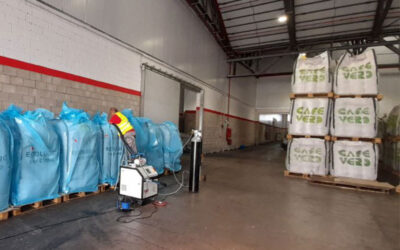
Organic fumigation using Modified Atmospheres (MAP) controls insects at ALL stages, without chemical residues.
In grain storage, pests rarely announce their arrival....
Pest control vs. fumigation? Know the difference.
In integrated pest management, it is common to confuse...
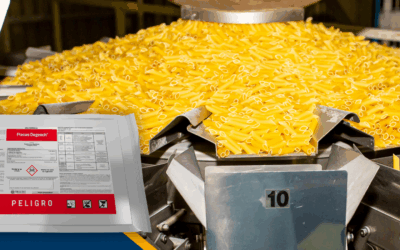
Advantages of Degesch Plates for pest control
Degesch Plates for Pest Control Have you ever wondered...

0 Comments